

The Geopolitics of Critical Minerals: China’s Stranglehold, Global De-Risking, and India’s Strategic Imperative.

By Abia Fathima

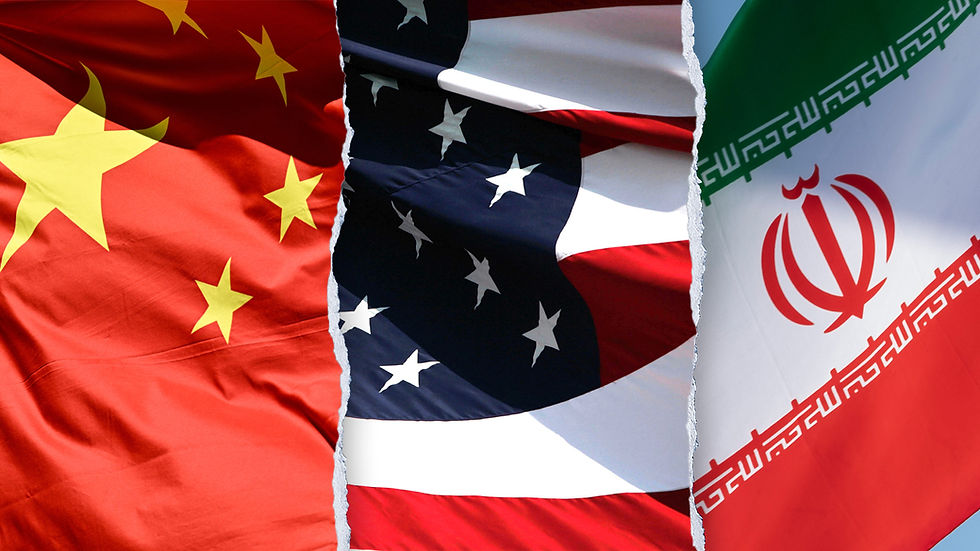
Image courtesy: The Hindu
Abstract
This article examines the geopolitics of the critical mineral supply chain, which is dominated by the People's Republic of China's structural control of midstream processing and refining, holding more than 90% of global rare earth separation capacity. Beijing's strategy was formalized in 2025 with the weaponisation of export controls, most notably by applying the Foreign Direct Product Rule to rare earth magnets, claiming jurisdictional control over foreign defense and technology supply chains. Allied de-risking efforts, such as the EU's Critical Raw Materials Act and the QUAD initiative, are in play but are riddled with execution gaps at the structural level, while high concentration risks are projected to persist past 2035. India's ambitious green transition faces acute vulnerability, resting on China for 82% of its lithium. While the National Critical Minerals Mission does strive for self-sufficiency through exploration and strategic acquisition, success here depends upon overcoming deep domestic challenges driven by high capital costs and technology deficits, necessitating urgent large-scale government support. The article will traverse through the structural reality of PRC’s dominance in the critical minerals supply chain, the policies which revolve around this dominance, international response and de-risking approaches, India’s outlook and policy imperatives.
Keywords: Critical Minerals, Rare Earth Elements, REE, India, PRC, green transition, FDPR
I. The Structural Reality: China's Unparalleled Supply Chain Dominance
A. Defining Criticality and Concentration: The Expanding Risk Perimeter
Supply chain fragility can only be meaningfully assessed if there is clarity over which materials are considered critical, and where bottlenecks arise. Traditionally, criticality was seen in terms of niche, high-tech materials such as the REEs. But the definition is shifting rapidly to reflect the holistic demands of the energy transition. In the United States, for example, the 2025 Critical Minerals List has grown to include foundational materials such as copper and silicon, alongside strategically important elements including uranium, boron, and lead. This expansion reflects the growing recognition that supply resilience is now a systemic concern across the whole advanced industrial base, rather than solely related to advanced electronics or green energy technologies.
The main risk associated with concentrated supply chains is, therefore, vulnerability to political instability, environmental shocks, or-most important of all-trade disruptions and export controls. The research suggests that China's persistent strategic choke point is not principally at the level of mineral extraction but overwhelmingly at midstream processing and refining.
The International Energy Agency pointed out that in an astonishing 19 out of 20 strategic minerals considered vital, China is the leading refiner, controlling an average market share of 70%. This concentration has not been reduced but instead enhanced in recent years.
The Rare Earth Elements supply chain is the paradigmatic example of this dominance. While China accounted for approximately 60% of global mining output for REEs in 2024, its control dramatically escalates in the subsequent stages. In separation and refining-the critical processes to create the materials that can be used in permanent magnets-China's share is around 91% of global production. This extends to those materials most essential for high-tech and defense applications, namely neodymium, praseodymium, dysprosium, and terbium. Beyond rare earths, China holds significant control of key battery minerals, holding 62% of global lithium refining capacity and control of 77% of cobalt.
B. Projecting Future Dominance: The 2035 Outlook
Analysis of global project announcements, while indicating some planned diversification outside of China, reveals that this process is expected to be critically slow, preserving China’s structural advantage through the next decade.
Diversification Lag in Refining Capacity
Detailed IEA analysis projects that progress toward more diversified refining supply chains will be slow. Looking ahead to 2035, the average market share of the top three refined material suppliers-a measure highly concentrated in China-is set to decrease only marginally, returning essentially to the high level of concentration reached in 2020. It means that the structural dependence will remain very high, with an average market share of 82% maintained by the top three suppliers.
This projection represents a critical reality check for allied policy mechanisms, including the US Inflation Reduction Act and the EU Critical Raw Materials Act. The projection for ongoing high concentration suggests that the current scale of allied capital deployment and regulatory support is presently insufficient to overcome quickly the ten-year head start and inherent economies of scale achieved through China's industrial consolidation. The cause-and-effect relationship is straightforward: insufficient allied investment in the midstream supply chain now preordains continued dependence on Chinese processing infrastructure at least until 2035.
Securing the Circular Economy Moat
Furthermore, China is building control over the future material supply through strategic domination of the circular economy. The long-term security of critical mineral supplies will increasingly depend upon the material recovered from waste streams, especially lithium-ion batteries.
Data from 2020 shows that two-thirds of global battery recycling capacity expansion has taken place in China. Dominance in the recycling sector is a third-order strategic play: by locking in resource security and long-term material flow from end-of-life products, Beijing gets an effective moat around its supply security, regardless of any successful Western efforts to diversify upstream mining. If Western-manufactured batteries are sent back to China for reprocessing, Beijing effectively keeps control over the lifecycle of the whole supply chain, taking what might otherwise become Western e-waste and turning it into a reliable, strategic Chinese resource.
II. Beijing's Strategic Playbook: Policies for Control and Geopolitical Leverage
China's dominance is not accidental but the result of a coordinated, decades-long policy framework combining inward industrial support, global resource acquisition, and sophisticated, aggressive economic statecraft.
A. Internal Control and Innovation (Inward Strategy)
China's domestic policy aims at increasing self-sufficiency and the better use of resources. The National Plan for Mineral Resources (2016-2020) mapped out an all-round strategy, including the perfection of industrial structures, encouraging mining, and promoting innovation. The internal orientation also enables targeted legislation to have a stabilizing effect on commodity markets and protect national producers. For instance, the regulatory tightening in 2025 included the shutdown of a major Chinese lithium mine owned by Contemporary Amperex Technology Co. Ltd. and the implementation of new government measures set to prevent producers from selling the mineral lithium below sustainable prices. These steps stabilize the market by supporting prices and securing long-term profitability for national leaders.
Strategic Substitution: The Sodium-Ion Hedge
The second critical element of China's resilience strategy is technological substitution. Given that imported lithium and cobalt are finite and geopolitically sensitive, Chinese industrial policy has focused on the accelerated development and deployment of Sodium-ion Battery (SIB) technology.
With heavy industrial policy support, such as the 14th Five-Year Plan and Made in China 2025, China is leading in both research and deployment in SIBs. Companies like CATL and HiNa Battery have already introduced commercial-scale SIB products, benefiting from state aid and favorable public procurement policies. This pivot is strategically calculated: China has limited lithium reserves but abundant sodium resources. In the process, by heavily investing in SIBs, China can reduce external dependence on lithium and cobalt and neutralize potential future leverage from Western nations securing upstream deals in regions like the Lithium Triangle. The technological hedge provides long-term resource optionality and resilience to supply chain disruptions targeting traditional battery chemistries.
B. Global Resource Acquisition (Outward Strategy)
Externally, an ever more aggressive resource diplomacy is pursued by China through the BRI. Firms in China, including SOEs, are aggressively seeking key minerals such as lithium and cobalt in emerging markets in Africa and Latin America.
Latin America, especially the so-called “Lithium Triangle” of Argentina, Bolivia, and Chile, is a major focal point, given that this triad possesses roughly half of the world's known lithium reserves. In similar fashion, the Democratic Republic of Congo has become a major destination for Chinese investment in the upstream mining segment for cobalt. Chinese players active along the entire value chain-from miner to battery maker-are essentially driven by supply security, cost control, and strategic backward integration.
The Role of ESG in Global Competition
While China pursues rapid upstream capture, Western approaches are increasingly using ESG criteria to provide resource-rich countries with a distinct alternative model for mineral development. Observers point out that though ESG challenges in mining are global, the leading part of Chinese companies puts their transparency increasingly under scrutiny. Toxic waste management, water resource depletion, and community welfare are some key areas where complaints arise. In particular, projects like the EU’s CRMA insist on ESG compliance and acting in line with international standards, presenting them as more sustainable and more transparent alternatives. In this way, ESG becomes a strategic competitive differentiator in securing resource deals in large parts of Africa and Latin America.
C. The Weaponization of Supply: China’s 2025 Export Control Architecture
The most significant geopolitical development in 2025 has been the formal expansion and weaponization of China's export control system, moving from simply commodity quotas to claiming jurisdictional control over foreign manufacturing.
Application of the FDPR
In October 2025, the Ministry of Commerce unveiled rare earth and permanent magnet export restrictions that put in place the toughest controls yet. This included China applying its very first Foreign Direct Product Rule (FDPR). The FDPR is a procedure long employed by the US to control high-tech exports to China. Now, Beijing could regulate the sale of foreign-made magnets if they contained at least 0.1% Chinese-origin heavy REE materials or employed Chinese mining, processing, or magnet-making technologies.
This represents a monumental strategic shift in application of the FDPR, transitioning China’s strategy from commodity leverage at the volume level, as demonstrated in the 2010 REE incident, to jurisdictional control by asserting the right to vet the end-use and manufacturing process of foreign companies around the world. With China commanding 93% of global magnet manufacturing, this move will require that non-Chinese supply chains be completely re-engineered to avoid reliance on any Chinese-linked technology or material, thus substantially deepening the vulnerabilities in the US defense industrial base. The controls explicitly target critical national security sectors:
Defense Sector: Export licenses will be largely denied, effective December 1, 2025, to companies affiliated with foreign militaries, including the U.S. defense sector. The Chinese Ministry of Commerce explicitly pointed out that any requests to use rare earths for military purposes will be refused.
Advanced Technology: Exports of rare earth materials used in highly advanced technologies, such as sub-14-nanometer semiconductors and next-generation memory chips, are now subject to case-by-case review, granting Chinese authorities significant discretion in delaying or conditioning exports.
Tactical De-escalation
In late 2025, following subsequent U.S.-China trade negotiations, a strategic and tactical de-escalation took place. China suspended enhanced licensing requirements for the named dual-use items dealing with gallium, germanium, antimony, and graphite until late 2026. This temporary pause reinstated the normal licensing framework for these materials and gave exporters one moment in time of stability in the regulatory environment. The suspension is a calculated maneuver, mindfully preserving stability in the wider industrial trade while sustaining China's most critical national security leverage. Indeed, the high-leverage strategic controls, including the FDPR on magnets and explicit military end-use prohibition, remain fully in force.
III. The Geopolitical Crucible of 2025: Responses and De-Risking Efforts
The concentration risk and China's explicit use of export controls have resulted in widespread counter-strategies from the major economies manifesting through legislative frameworks and multilateral cooperation efforts to achieve supply chain resilience.
A. Western Legislative Frameworks
New Economic Security Doctrine: The European Union has shifted focus to the Critical Raw Materials Act, under Regulation (EU) 2024/1252. In June 2025, the European Commission designated 13 projects outside of the European Union as "Strategic Projects" under the CRMA. It is a critical designation, in that these projects now demonstrate alignment with high policy and sustainability standards of the European Union and thus have preferential access to financing and regulatory certainty. The EU actively advances a more transparent model for resource development through strict ESG standards in an attempt to attract investments away from Chinese-dominated venture projects in resource-rich nations.
Similarly, the United Kingdom formalized its ambition with the Critical Minerals Strategy-Vision 2035, launched in conjunction with the Industrial Strategy in July 2025. The UK strategy recognizes that yearly demand for copper is projected to almost double, and lithium demand is expected to jump by 1,100% by 2035. It focuses on maximizing domestic production, developing midstream processing capabilities, and establishing a circular economy in order to reduce reliance on vulnerable foreign supply chains.
In the US, laws such as the IRA and the Bipartisan Infrastructure Law support domestic R&D for sustainable energy storage systems, explicitly providing funding and tax incentives for next-generation battery chemistries. These policies are designed to build supply chains that are geographically diverse and resilient to Chinese leverage.
B. Gaps in Multilateral Coordination and Execution
Multilateral forums, including the Quad and the MSP, have identified concerted action on this issue as a priority. The Quad Statement of Principles on Clean Energy Supply Chains in the Indo-Pacific, launched in July 2025, focuses on expanding manufacturing, driving demand, and enabling commercial-scale production capacity for key components. The MSP, meanwhile, focuses efforts on the identification and development of alternative producers and processors outside the PRC.
Nevertheless, at the end of 2025, there are still considerable implementation gaps and a general lack of operational integration in these multilateral initiatives. “The QUAD members, Australia, India, Japan, and the United States, still operate in an almost completely isolated fashion in the critical processes of recycling and advanced material processing”.
The Structural Coordination Deficit
The main problem is an inability to translate policy alignment into operational integration. Particular gaps include:
Lack of Shared Frameworks: The lack of a common taxonomy in critical minerals, shared recycling targets, and technology benchmarking prevents economies of scale and cooperation across borders.
Infrastructure is very uneven: collection and reprocessing infrastructure is highly uneven; Japan has leading technology in recovering critical minerals from secondary sources, while India's e-waste sector is still largely informal and the US has very limited dedicated recycling facilities.
This deficit means that, even though the Quad achieved policy convergence, the July 2025 initiative, it has not as yet succeeded in pooling technological expertise, such as Japan's, with financial resources to build the non-Chinese processing plants that are needed to overcome the structural 91% REE refining dominance. Failure in coordinated recycling and refining efforts effectively concedes the future, the circular supply flow of critical materials to China.
C. Mitigation Strategies: Substitution and Stockpiling
Strategies that focus on reducing the material intensity of modern technology, along with building defensive reserves, complement diversification efforts. The thrust for technological substitution, especially by Sodium-ion Batteries, or SIBs, is gaining momentum. SIBs utilize abundant domestic materials, thus reducing reliance on imports of materials such as lithium and cobalt. Global demand for Na-ion batteries is set to see rapid growth, projected to reach in excess of 90 GWh by 2035 from 4 GWh in 2024. This trajectory presents a feasible route to long-term reduction of dependence on Chinese-dominated, globally strained lithium and cobalt chains. Stockpiling remains a necessary defensive measure. The experience of Japan, which faced a sudden Chinese export ban on REEs in the wake of a 2010 territorial dispute, showed the crucial resilience afforded by strategic reserves. While Beijing's desire to maintain its dominant market position and international legal constraints-to say nothing of the 2014 WTO ruling-appear to discourage the use of sustained, prolonged export controls during peacetime, strategic stockpiling buys time in the face of short-term geopolitical shocks. Yet, strategic observers note that the 2025 FDPR mechanism represents a legal and jurisdictional control far more sophisticated than the simple volume quotas that stockpiling alone cannot defend against restrictions on technology use or military end-use.
IV. India's Conundrum: Ambition, Vulnerability, and the Path to Self-Reliance
By 2030, India's ambitious green transition, with targets of 500 GW of non-fossil energy capacity and 30% penetration in Electric Vehicles, is highly vulnerable to the geopolitical fault line of critical mineral supply.
A. Acute Structural Vulnerability and National Security Risk
Quantifying India's reliance on China for key minerals is acute and creates significant risk in terms of economic disruption and national security vulnerability. The Economic Survey 2023-24 warns that if this dependence is not addressed, there is a risk of derailment in India's green transition, which would require an estimated 8,220 tonnes of REEs by 2030. EVs and wind turbines alone are projected to consume more than 50% of the projected REE demand, 4,010 tonnes in 2025.
Import data analysis from 2019 to 2024 shows deep dependence on the PRC in both basic and specialized materials.
Lithium: indeed, 82% of the country's supplies are imported from China. This high dependence directly jeopardizes home EV battery manufacturing and energy storage ambitions.
Bismuth: Its reliance on China came to 85.6%.
Silicon: China provides 76 percent of India's silicon imports.
Graphite and Titanium: China provides 42.4% of India's graphite and 50.6% of its titanium imports.
This is more than just a commercial dependency; it essentially compromises national security. As China controls most of the midstream-from 62% refining of lithium to 77% control of cobalt-the deliberate imposition of restrictions by Beijing would stall New Delhi's manufacturing capacity for critical defense and energy components overnight.
B. Policy Response: The National Critical Minerals Mission (NCMM)
Noting this structural vulnerability, the government of India has recently initiated the National Critical Minerals Mission in January 2025. This mission is mandated to decrease this heavy import dependence, with focus mainly on REEs and battery materials.
Domestic Exploration and Production Incentives
Key actions under the NCMM on the domestic front are to task the GSI with 1,200 exploration projects by 2031. Importantly, recognition of the need for developing midstream has come about, and a scheme of Rs 3,500-5,000 crore was accorded in June 2025 to encourage indigenous REE and magnet production through reverse bidding. The target: self-sufficiency within five years
Strategic International Acquisition and Alliances
At the same time, India has pursued an outward strategy of resource diplomacy and acquisition, for which a joint venture of three PSUs, KABIL (Khanij Bidesh India Ltd.), acts as the strategic vehicle. KABIL has secured critical lithium deals in Argentina, which it expanded in February 2025, besides participating in cobalt projects in Australia. Similarly, participation in multilateral forums includes joining the Quad Critical Minerals Initiative in July 2025 and reaching out to the Minerals Security Partnership (MSP) in pursuit of ‘China+1’ supply chains with partners such as the US and UK. For example, diversification also involves R&D into alternatives such as sodium batteries and developing a stockpiling strategy modeled on China's reserves for high-risk, 100% imported minerals like germanium.
C. Structural Challenges and Impediments to Implementation
Despite the ambitious policy framework of the NCMM, India's diversification efforts are constrained by structural challenges inhibiting rapid scaling.
It's termed “structural”, ingrained in outdated policies, pervasive environmental hurdles, and a significant deficit in refining technology. Though it has the fifth-largest deposits of REE in the world, including recent finds of lithium in Jammu & Kashmir, domestic exploration is lagging. This is exemplified by the mixed results of recent auctions, where only 48% of auctioned blocks were sold as of early 2025. The central impediment is the gap in capital and technology. High capital costs associated with establishing competitive processing and refining facilities demand substantial fiscal support. To successfully compete with China’s subsidized scale, experts suggest the need for fiscal incentives comparable in scope to the $10 billion outlay dedicated to the domestic semiconductor manufacturing ecosystem. Although the government has moved to amend the Mines and Minerals Act and unlock private sector involvement by removing six minerals off atomic lists, the surge in private capital and technological expertise required for self-sufficiency remains incomplete.
V. Conclusion: Strategic Outlook and Policy Recommendations
A. Projections and Key Risks to 2035
This analysis confirms that China has durably entrenched itself in the structural dominance of the global critical mineral supply chain with a commanding lead in both refining and recycling capacity, a situation significantly strengthened through aggressive fortification in 2025.
Persistent Concentration: The long-term trajectory, projecting only a marginal decline in concentration through 2035, confirms that structural dominance will persist. This entails that Western and allied nations must commit to sustained, intensive, decade-long investment to meaningfully alter the supply landscape. Failure to rapidly deploy capital into the midstream processing sector risks locking in long-term geopolitical dependence.
The application of the FDPR by China in 2025 accelerates geopolitical bifurcation as a result of dual-market risk and technological exclusion. This is the strategy that is forcing the re-engineering of non-Chinese supply chains in their entirety, raising costs and complexity. By explicitly targeting foreign military users and advanced technologies such as sub-14-nanometer semiconductors, critical strategic sectors face immediate risks of technological exclusion and deeper vulnerabilities in their defense industrial bases.
B. Quad/MSP Allied Policy Cohesion Recommendations
For a meaningful counterbalance to China's structural advantage and aggressive statecraft, allied efforts need to shift from policy alignment to integrated operational execution.
Operationalize the Midstream Processing Taskforce: The QUAD and MSP must immediately go beyond statements of principles to establish a permanent, integrated taskforce which will work on operationalizing midstream capacity. This includes mandated targets for synchronized public-private investment in non-Chinese refining facilities, especially in third-country processing hubs in the Indo-Pacific, using advanced technology expertise from members like Japan.
Harmonisation of Recycling Infrastructure and Taxonomy: If the allies are to prevent full capture of the circular economy moat by China, they need to develop a common taxonomy of critical minerals, along with a harmonized approach to e-waste classification and recycling targets. Putting in place a mechanism such as a ‘QUAD Recycling Index’ would track progress, pool investment, and close the gap in future material supply currently being ceded to China.
Engage in Coordinated ESG Diplomacy: Allies should position standardized ESG compliance and international labor standards as important aspects of their raw materials contracts. In employing blended financial models, public funds, green bonds, private investment, Western investment can be positioned as a steady, transparent alternative to rapid Chinese upstream acquisition in resource-rich regions of Africa and Latin America, securing long-term, ethically sourced supply partnerships.
References
(Abia Fathima is currently a research officer at C3S. The views expressed are those of the author and do not reflect the views of C3S.)



Comments