

Destined for War: Can China and the US escape the Thucydides Trap?

By Abia Fathima, Research Officer, C3S

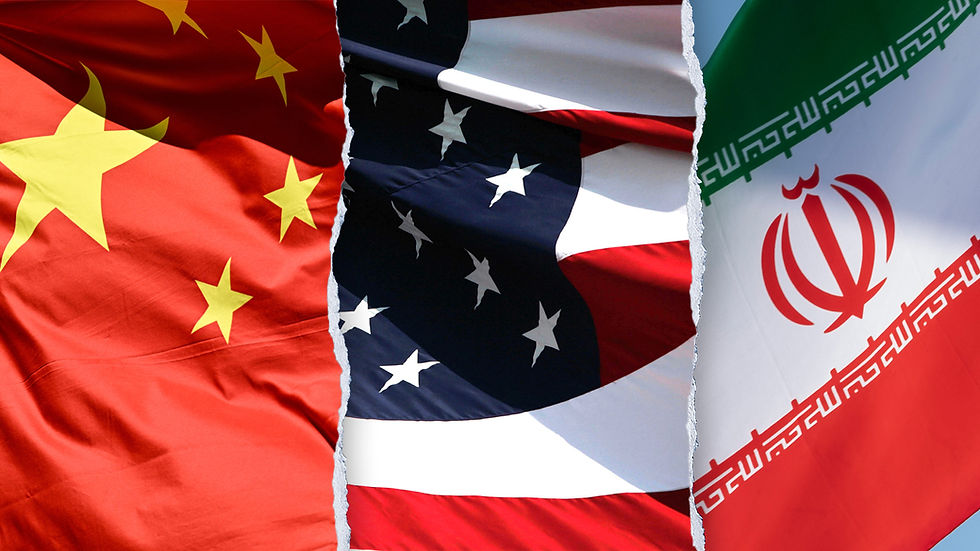
Image Courtesy: The Atlantic

Introduction
Coined by Political Scientist Graham Allison in the early 2010s and popularised in his 2017 book Destined for War, the “Thucydides Trap” has become a term for a terrifyingly simple historic pattern, a pattern which displaces dynasties as a rising power threatens its existence. The Thucydides Trap has transformed from an academic footnote to one of the most heavily scrutinised idioms in modern geopolitics.
The ancient theory returned to the forefront of international diplomacy during the recent high-stakes summit in Beijing. Meeting with US President Donald Trump, General Secretary Xi Jinping opened his remarks, at the Great Hall of People, with a philosophical inquiry:
“Can China and the United States transcend ‘Thucydides Trap’ and forge a new paradigm for major-power relations?”
While the question was framed as an invitation for great power collaboration, a deeper, analytical look at the contemporary relevance reveals a deeper strategic performance. The Thucydides Trap has become a foundational element of Beijing’s geopolitical narrative, one that aims to mold the terms of engagement with the West while bracing for confrontational friction of flashpoints, like Taiwan.
Historical Reference of Athens, Sparta and Structural Fear
In order to understand the weight of Xi’s question, one must look back at the origins of Western historical literature. In the fifth century BC, the Greek world was shattered by the Peloponnesian War (431-404 BC), a multi-decade long tragedy that pitted the maritime empire of Athens against the land-based hegemon, Sparta.
As the chronicle narrates, the Athenian historian and general Thucydides looked past the diplomatic insults and treaties and uncovered the true underlying cause of the war, which he famously observed as:“It was the rise of Athens and the fear of Sparta that made war inevitable.”
Graham Allison’s modern adaptation of this thesis reviewed 16 historical case studies spanning 500 years, where a rising power challenged a ruling hegemon. Out of the 16, 12 of those instances resulted in war. The mechanism of the “trap” is psychological and structural in a way that a rising power feels entitled to greater influence, while paranoia grows in the established power. Under such circumstances, even a minor spark, a localised diplomatic crisis or a trade dispute can cascade into global conflict.
Why Xi invoked the Thucydide’s Trap?
Xi Jinping’s invocation of the trap is not new to the rhetorical mechanism of the Chinese Communist Party (CCP). Beijing has used the phrase multiple times since 2014, at least. However, using it during a high-level summit serves differing objectives for China: by projecting responsibility, shifting blame to Washington, and the Taiwan Ultimatum.
By questioning how the two nations can “transcend” the trap, Xi positions China as historically literate, a responsible global actor seeking to avoid war actively. This framing subtly suggests that because China is merely “rising” naturally, any conflict or war would be the result of the US’ paranoia – an overreaction. If Washington continues to implement chip export controls, hike tariffs or build and break regional alliances, it is the US that is “falling into the trap” by taking China as an adversary. Most pressingly, the historical reference acts as a sophisticated, preemptive defence regarding Taiwan. During the summit, Xi warned Trump that “the Taiwan question is the most important issue in China-US relations”, adding that any wrong move could push the two nations against each other, putting them in a confrontational position. By invoking the Thucydides's Trap, Xi implicitly frames a potential Chinese move on Taiwan, not as an act of unprovoked aggression, but as an inevitable looming doom that Washington must accommodate.
Trump’s response on social media highlighted the asymmetric nature of this rhetoric sparring. While Xi spoke in grand, historical paradigms, Trump viewed the exchange through a transactional lens, writing that Xi had “very elegantly referred to the United States as perhaps a declining nation”, before quickly clarifying that under his current administration, the US was actually “the hottest Nation anywhere in the world”.
Contemporary Reality
While the Thucydides trap offers a compelling narrative, many foreign policy analysts argue that applying it to the 21st Century US-China dynamic is fundamentally flawed and dangerously deterministic. The rivalry between Washington and Beijing is vastly different from an ancient war between city-states for multiple reasons. Unlike Athens and Sparta, which operated largely independent economies, the US and China share a massive financial web, with bilateral trade exceeding $500bn.
The sheer economic devastation of a possible war acts as a powerful mutual deterrent. Modern competition is fought in shades of grey, rather than total military mobilisation. The current US-China relationship is defined by intense, ongoing bargaining over semiconductor export restrictions, Ai regulation and standards, Rare Earth Elements, and climate financing.
The Thucydides framing assumes a strict bipolar world where only two actors matter. In reality, middle powers and regional blocs, including India, Australia, Japan, ASEAN and BRICS possess significant influence. These nations do not wish to be forced into a binary choice between American security and Chinese trade, or vice versa. Instead, they actively work to build a regional architecture that dampens escalation.
The Looming Doom of the Myth
Ultimately, the true hazard of the Thucydides Trap in modern diplomacy is not that history is bound to repeat itself, but that the narrative can become a self-fulfilling prophecy.
When both Washington and Beijing view every economic policy, technological and military advancement, or naval exercise through the lens of an “inevitable collision course”, the room for diplomatic nuance shrinks. Routine trade negotiations risk being overinterpreted as existential strikes, and small enforceable bargains that could stabilise the relationship are cast aside in favour of hyper-securitised policies.
Xi Jinping’s philosophical question in Beijing was highly effective because it appeared open-ended while foreclosing alternative perspectives. It set a trap of its own – accepting the premise means agreeing that China’s rise must either be fully accommodated on Beijing’s terms, or global catastrophe will follow.
For international policymakers, the challenge is to reject this rigid binary, recognising that modern geopolitics is shaped by choices, policies and human agency, not by the deterministic ghost of an ancient Greek War
References
(Abia Fathima is a research officer at C3S. The views expressed here are of the author's and do not reflect the views of C3S.)



Comments