

Putin’s China Visit: Geopolitical Signaling

By Shubhi Malhotra and Dr. Adityanjee

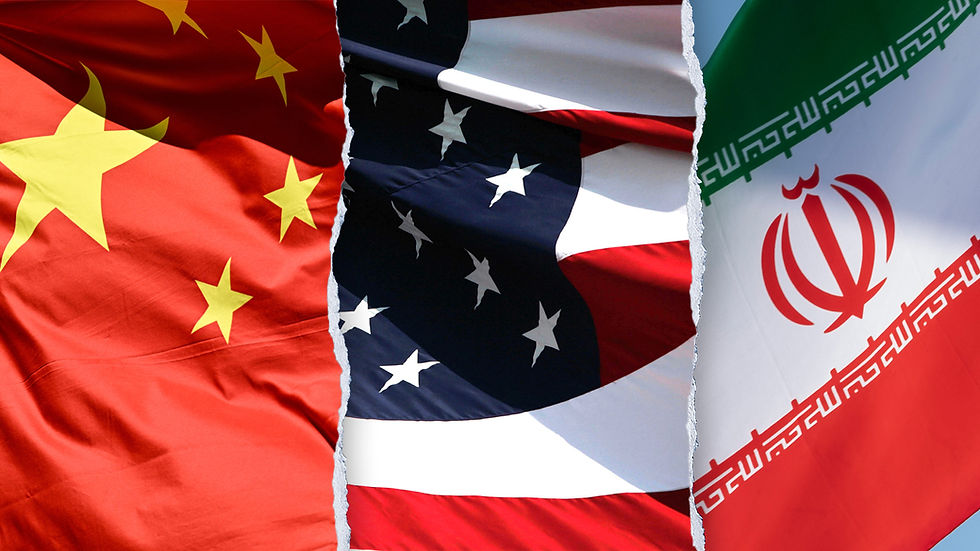
Image Courtesy: China US Focus
Introduction
In diplomacy, the calendar is rarely incidental. When Russian President Vladimir Putin touched down in Beijing on the evening of May 19, 2026, for his 25th visit to China, the direction of events surrounding the trip carried a message as deliberate as it can be. His arrival came barely four days after U.S. President Donald Trump had concluded his own two-day summit with Chinese leader Xi Jinping, a visit from which the White House claimed diplomatic and trade victories, but which analysts noted produced less than advertised.
Putin's Beijing visit, therefore, was not merely a bilateral affair. It was, at its core, a piece of theatre art with a global audience, a carefully staged reaffirmation that the Moscow-Beijing axis endures, that China has not tilted decisively toward Washington, and that the architecture of the multipolar world, that both Russia and China have championed, continues to take shape. Understanding what was said, what was signed, what was withheld, and what the visit revealed about the evolving geometry of Sino-Russian relations requires reading both the text and the subtext.
A Summit After Trump's Summit
The timing of Putin's visit was hardly coincidental. Trump's trip to Beijing, which concluded around May 15, had generated considerable Western attention as a potential turning point. It was a moment when it was believed that China might shift its posture on Russia's war in Ukraine, or when the U.S.-China relationship, strained by years of trade wars and strategic competition, might find a new equilibrium. That visit ended with both sides pledging "strategic stability” but disagreeing on what precisely they had agreed upon.
Into this charged atmosphere walked Putin. His aircraft landing in Beijing, greeted by Chinese Foreign Minister Wang Yi, an honor guard, and youth waving Chinese and Russian flags, sent a message that Beijing's "old friend" still commanded a ceremonial welcome that most of the Western leaders cannot match. As NPR noted, the relationship between Moscow and Beijing retains a warmth and institutional depth that the newly arrived American visitor could not simply displace. The contrast in Optics with Trump’s visit was obvious during which US presidential security personnel were manhandled by the Chinese. US visitors dumping Chinese gifts, identity badges, burner phones and other memorabilia in trash at the end of Trump’s visit was quite a stark admission that US China relations are based on lack of mutual trust and bedeviled with suspicion and mutual acrimony.
Xi received Putin at the Great Hall of the People. The symbolism of venue was itself deliberate: the same hall where Trump had sat days before now hosted the man Trump regards as his principal adversary. For Xi, hosting both leaders in rapid succession was a masterclass in strategic assertion, a demonstration of China's ability to maintain multiple partnerships simultaneously, leveraging its centrality without committing to any single alignment. Simultaneously, Xi Jinping was able to project successfully that China has arrived on the world stage and leaders of adversarial superpowers are coming to him in Beijing as supplicants.
The 47-Page Declaration
The centerpiece of the summit was a joint declaration, which was a 47-page policy document described by Kremlin aide Yuri Ushakov as "conceptual" and "programmatic". It focused on building a "multipolar world and a new type of international relations." The two leaders signed this declaration alongside approximately 20 cooperation agreements at a formal ceremony (with some additional documents expected to be announced separately) spanning trade, technology, and broader bilateral cooperation.
The multipolar world concept is not new in the Russia-China diplomacy. Both leaders have for years spoken against what they characterize as American "unipolar hegemony." But the formalization of this vision in a joint 47-page document elevates the rhetoric into something closer to doctrine. As Al Jazeera's correspondent Katrina Yu observed from Beijing, Xi's call for multipolarity is understood explicitly as a call for a world in which U.S. power and influence is diminished.
Putin, in remarks after the signing ceremony, framed the relationship as a pledge to expand bilateral cooperation and engage jointly in international forums to build a "strong foundation for a multipolar world." Xi, in turn, held up Russian Chinese relations as a "model" for relations between major powers, an extraordinary claim given the scale of tensions that have defined great-power relationships in recent decades.
For Moscow, the declaration served multiple functions. It offered Putin, facing Western isolation over the Ukraine war and the weight of international sanctions, a prestigious platform affirming that Russia retains a credible partnership with the world's second-largest economy. For Beijing, the declaration balanced Trump's recent visit, as China would not be seen as pivoting toward Washington at the cost of its relationship with Moscow.
The Crisis - Ukraine and Siberia 2 Pipeline
Perhaps the most consequential element of the summit's joint statement was its attention on Ukraine. According to Euromaidan Press and Radio Free Europe/Radio Liberty, the joint statement called for the "complete elimination" of the "root causes" of what both sides termed as the "Ukrainian crisis."
This formulation is not neutral. The "root causes” framing is Moscow's preferred narrative, one that blames NATO's eastward expansion and Western encirclement for triggering Russia's invasion, rather than treating the invasion itself as the cause of the conflict. By formally adopting this language in a bilateral document, Beijing has, at least on paper, aligned its diplomatic opinion with Moscow's.
When talking about the Power of Siberia 2 gas pipeline, no issue loomed larger and no issue better illustrates the asymmetry now defining the Russia-China relationship.
Russia has sought for years to lock in a deal on this pipeline. The project is existential for it, as European gas markets have largely closed to Russia following its full-scale invasion of Ukraine, and China represents the only market large enough to absorb the surplus. Here, China has a leverage, can afford to wait, and is wary of excessive dependence on any single energy source. As such, no firm deal has been signed in this matter.
The gap between Russian eagerness and Chinese caution over the pipeline is itself a piece of geopolitical messaging directed towards the partnership itself. Negotiations have repeatedly stalled over pricing, construction costs, supply volumes, and Beijing's concern about over-dependence on Russian energy.
The summit did, however, confirm significant energy momentum in other respects. Xi noted that trade in energy sectors was expanding substantially. Russia, having lost European markets, has become heavily reliant on Chinese demand, a structural shift that gives Beijing a massive leverage over Moscow for the foreseeable future.
The Treaty Extension and Military Signaling
The summit also marked the 25th anniversary of the Treaty of Good-Neighborliness and Friendly Cooperation, the foundational diplomatic document of the modern Russia-China relationship. Both sides agreed to extend the treaty, conveying continuity and institutional commitment.
Beyond the treaty extension, Russia and China agreed to deepen military trust and cooperation, including expanding joint exercises, air patrols, and maritime patrols. Moscow also reaffirmed its support for the "One China principle" on Taiwan, a consistent element of Sino-Russian alignment that sends its own signal to Washington, which has increasingly emphasized deterrence in the Taiwan Strait.
Although China does not want to be seen as directly enabling Russia's war in Ukraine, it definitely serves the purpose of demonstrating strategic alignment, without crossing the lines, inviting Western retaliation.
The Visit and the Evolving Partnership
First, the emerging partnership is highly asymmetric. Beijing is Moscow's economic lifeline, its primary energy customer, its technology supplier, and its political patron on the world stage. China, for its part, benefits from cheap Russian energy, from a Russia-shaped disruption to the Western-led order, and from Moscow's support to China on Taiwan and other ever-expanding list of core Chinese interests. But China is not dependent on Russia in any comparable sense. The failure to seal the Power of Siberia 2 deal on Russian terms illustrates Beijing's comfort with leveraging this asymmetry to its advantage.
Second, China is playing less a diplomatic game of strategic ambiguity and more of strategic assertiveness. By hosting Trump one week and Putin the next, and by signing a multipolar world declaration with Moscow while maintaining a degree of economic engagement with Washington, China has showed that it does not want the West to collapse, but it also does not want a restored unipolar American order. The goal is a world of competing powers in which China occupies the pivotal position.
Third, the multipolar declaration is a challenge to the so-called rules-based US-led international order. The joint declaration is not simply about Russia and China's bilateral relationship. It is a challenge to the post-1945 liberal international order anchored in Western institutions, like the UN system, the WTO trading framework, the role of the U.S. dollar in global finance, and the NATO-centred security architecture in Europe. Both Moscow and Beijing have concluded that this order serves American interests at the expense of their own. Their joint declaration is an invitation, particularly to the Global South, to imagine and build alternative arrangements.
Boosting the BRICS:
This nexus between Russia and China will complicate India’s position further. While still having a complicated relation with China, it will face more complexities, specifically in organizations like the SCO and BRICS, where both the other countries occupy a strong position. The 18th BRICS Summit is an upcoming international summit of the BRICS nations, scheduled to be hosted by India on September 12-13th ,2026 as part of its BRICS chairmanship. The high-profile international gathering is expected to witness the participation of several major world leaders, including both President Vladimir Putin and President Xi Jinping. India would like to get BRICS support for India’s candidacy for the permanent membership of the UNSC.
Resurrecting the RIC:
Russian President Putin will make every effort to bring rapprochement between China and India to the extent that the Russia, India China trilateral can be effectively resurrected on the sidelines of the BRICS meeting in September 2026. Despite Putin’s messaging to both India and China to bring the rhetoric down and cooperate with Russia in resurrecting an anti-West alliance, such efforts are unlikely to succeed despite growing closer cooperation among the three countries on some of the issues.
Implications for the Rest of the World
For Europe, the summit is a signal that hopes of driving a wedge between Russia and China have not yet materialized. The partnership remains resilient, even if its dynamics have shifted.
For India, the summit presents characteristic complexity. New Delhi maintains strategic partnerships with both Russia (its largest arms supplier for decades) and the West (increasingly through the Quad and bilateral security arrangements).
As for the Global South, the declaration will be seen differently than in the Global West. Many developing nations have long felt that the U.S.-led order has not served their interests equitably. A world in which multiple power centers compete may offer them things differently. The Russia-China nexus frames itself as an alternative; whether it proves to be one remains to be seen.
Conclusion
Putin's 25th visit to China delivered multiple messages simultaneously.
To Washington: the Russia-China partnership endures. Trump's visit to Beijing did not loosen it,
To Kyiv and Europe: China has not shifted its position on Ukraine. Its language has, if anything, moved closer to Moscow's framing,
To the Global South: an alternative to the Western-led order is being actively constructed, with Beijing and Moscow as its architects, and
To each other: the partnership is at the highest as it has ever been. The relationship is a partnership of convenience elevated into something that, for both leaders, has become a cornerstone of their respective visions for a post-American led world order.
Whether that world order is achievable, and at what cost to global stability, is the defining geopolitical question of this decade. Putin's Beijing visit did not answer it. But it demonstrated, with considerable clarity, the direction in which both Moscow and Beijing intend to travel in near future.
References
Putin and Xi sign ‘Multipolar world’ declaration in Beijing. (2026, May 20). The Moscow Times. https://www.themoscowtimes.com/2026/05/20/putin-and-xi-sign-multipolar-world-declaration-in-beijing-a92796
Shamim, S. (2026, May 20). ‘Multipolar world’: What Xi and Putin announced after Beijing summit. Al Jazeera. https://www.aljazeera.com/news/2026/5/20/multipolar-world-what-xi-and-putin-announced-after-beijing-summit
Standish, R., & Hood, C. (2026, May 20). Putin gets show of unity, but no new pipeline deal in Beijing summit. RadioFreeEurope/RadioLiberty. https://www.rferl.org/a/putin-xi-power-of-siberia-iran-war-trump-china-russia/33760781.html
Tan, H. (2025, December 17). Russia's wartime economic relationship with China is critical, but an 'embarrassing reversal': Think tank. Business Insider. https://www.businessinsider.com/russia-economy-china-reliance-oil-exports-embarrassing-reversal-2025-12
Tril, M. (2026, May 20). Beijing endorses Moscow’s ‘root causes’ framing on Ukraine in Putin-Xi joint statement. Euromaidan Press. https://euromaidanpress.com/2026/05/20/beijing-endorses-moscows-root-causes-framing-on-ukraine-in-putin-xi-joint-statement/
Rohit KA & Dr. Adityanjee (2026, June 4th) Trump-Xi Summit 2026: Geopolitical Messaging: How the 2026 Beijing summit reshapes risks and opportunities for regional middle powers. https://www.c3sindia.org/post/trump-xi-summit-2026-geopolitical-messaging
(Shubhi Malhotra is a Training Fellow in Strategic Studies at CSA, and Dr. Adityanjee serves as the President of CSA. The views expressed in this article are solely those of the authors and do not necessarily reflect the views of C3S.)


Comments