

Balance of Power, G-2 Condominium and Emergence of Multipolarity! : By Harsh Sinha, Research Fellow & Dr. Adityanjee, President, CSA


Image Courtesy: Vijesti
Introduction:
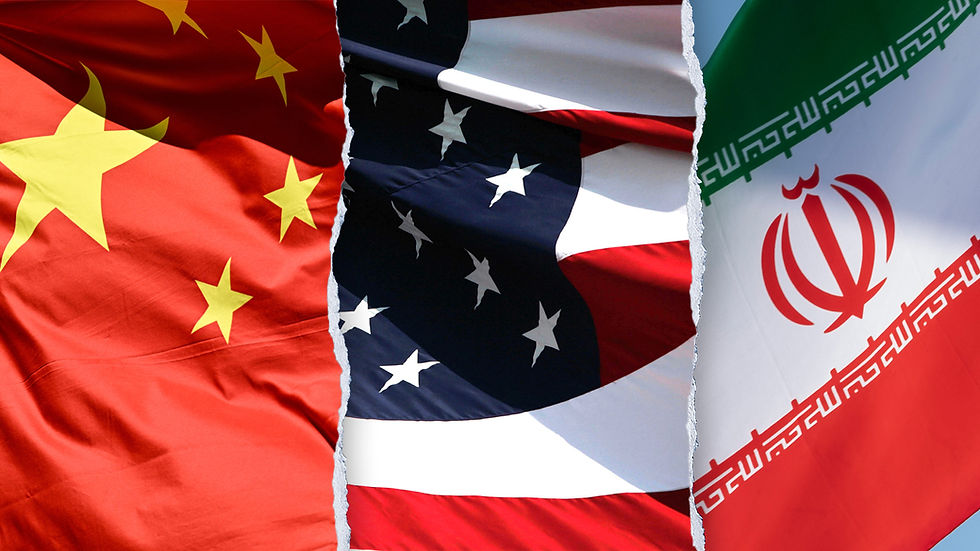
The concept of a “G-2”, a US–China global duopoly, has received renewed attention within both the media and strategic-policy circles over recent months. In this sense, the declaration by the U.S. President in 2025 that “THE G2 WILL BE CONVENING SHORTLY!” re-ignited speculation that Washington and Beijing might seek to reimagine global governance through a tightly knit bilateral framework. For instance, The Economic Times framed the G-2 arrangement as one that would, in effect, position the two powers as “peer managers of world affairs,” with almost equal weight in global decision-making ranging from trade and climate to technology and security [1]. Such public declarations and media coverage suggest that the narrative of US–China co-leadership has re-emerged forcefully on the world stage.
Yet, many observers, particularly from India, continue to be very skeptical. Some analysts at think-tank argue that this latest G-2 drive has a fundamental “structural mismatch” with current international realities. The world today, they argue, is already moving toward broader, more diffuse competition rather than consolidation. The G-2 concept, an ORF commentary says, is more “mirage” than workable architecture: bilateral spectacle and short-term bargains cannot substitute for robust multilateral institutions or inclusive global governance [2].
Bipolarity and Avoidance of Thucydides Trap:
The term "Thucydides Trap," was coined by Prof Graham Allison in his book, Destined for War and has become a buzzword in the western strategic discourse [3]. This concept refers to the precarious situation when an ascending hegemon threatens to displace a reigning hegemon—a situation that historically has often led to war. The US and the former Soviet Union (FSU) avoided major war by not confronting each other directly. However, the US engaged FSU while containing it simultaneously and encouraging China to emerge as a rising power to balance the former Soviet Union. As China continues to rise, challenging the global leadership of the United States, the concept of Thucydides trap is relevant. The US establishment is heavily preoccupied in avoiding a direct war over with China over Taiwan Strait. US is essentially repeating the historic formula of dissolution of the FSU by engaging China economically but also allying with others in containment of China. US has learnt from its invasions of Iraq and Afghanistan that it cannot sustain a faraway war for long without hemorrhaging its economy and depleting its military. The proposed G-2 condominium is a shrewd strategic move by the US to placate China as a perceived peer to avoid direct war.
Emerging Poles:
Besides the US and China, we are, indeed witnessing an oligo-polar world with other poles being the Russian Federation, the EU and India. Groups like BRICS-plus, G-20, ASEAN and SCO would facilitate multipolarity despite attempts by the US to foist bipolarity in the form of G-2 Condominium. From the US perspective, engaging China while simultaneously containing it in a bipolar world gives it higher probability of extending its shelf-life as the reigning hegemon of the world. The US has historical experience of doing the same during the cold war years with the rival superpower, the former Soviet Union. The US started to engage China under Nixon administration, helped it grow economically and strategically while containing the Soviet Union. From Chinese perspective, the goal is to keep world bipolar and Asia unipolar till China can achieve its long-term goal of unipolar world order led by Communist China. China is fiercely contesting the rise of India and Japan in the Asian theatre.
Russian Federation & G-2:
From the perspective of the Russian Federation, G-2 condominium between US and China is a national insult. Russia is asserting its major power status and signaling to the world that it is not a junior partner of China. Under Putin doctrine, dissolution of the FSU was a major national catastrophe. Russian Federation would prefer to resurrect the FSU if possible. Russian Federation has geostrategic compulsions owing to the Ukraine war with NATO and EU necessitating closer cooperation with China. That country has made historic claims on currently Russian territories including Vladivostok port and the Russian far east. Russia is acutely aware of the dangers of G-2 condominium and would support India in plurilateral platforms to balance China. The recent visit of Russian President Vladimir Putin to India and enhanced bilateral economic and military cooperation is a testimony to Russian agenda of asserting its strategic weight and influence globally without yielding space on the table. Russian Federation’s technological assistance to India with the navigational capability and capacity in the fast thawing Arctic and the Northern Sea route suggests that Russia is uncomfortable with China’s postulation of “Near Arctic country” status.
Japan & G-2:
Post World War II Japan has been hamstrung by the MacArthur dictated constitution that does not allow for power projection by Japan internationally and restricts the Japanese defense forces a limited mandate to defend the country. Abe doctrine sought to change that situation in early 2000s. the geopolitical situation today is very different from pre–World War II era. Japan is no more an imperialistic country bent upon subjugating other Asian nations militarily. This has led to Chinese belligerence in the Asian theaters as it remains unchecked and unbalanced in Northeast Asia. The comments by the newly sworn in, first female conservative Prime Minister Sanae Takaichi on lack of historicity of Chinese claims on Taiwan created an uproar in China. Free and open Taiwan strait is very important to Japanese commercial and mercantile interests. Therefore, Japan cannot be expected to allow China to convert Taiwan Strait into a private lake of the PLA. If Japan and the Russian Federation can normalize bilateral relations by resolving the Kuril Islands dispute it may check Chinese ambitions in the Northeast Asia. In such a scenario, Japan would balance the Chinese hegemony in Asia benefiting Russian Federation from being a subjugated junior partner of China.
G-2 and the ASEAN Perspective:
The ASEAN countries for the last twenty-five years have faced this dilemma of keeping equal distance from both US and China while engaging both economically. The ASEAN has failed as a regional grouping to persuade China to evolve and accept a code of conduct in the South China sea. The ASEAN has engaged both India and Japan in the regional Shangri La security dialogue with a view to diminishing the G-2 rivalry in the Indo-pacific and specifically in the Southeast Asia region. The ASEAN would have preferred both India and US to be the part of the RCEP, the ASEAN backed trade regional block. The ASEAN countries pragmatically prefer a multipolar world instead of G-2 condominium owing to acute geopolitical rivalry and its impact on the respective economies of the member states. Chian continues to have its expansionist claims on the EEZ of several member states and has disputes on sovereignty of some islands in the region forcing ASEAN countries to engage US militarily for their security and national defense.
Critique of Multipolarity:
This skepticism finds significant resonance in Indian strategic discourse. In his 2023 essay "India at G7: the Myth of Multipolarity," well-known foreign-policy commentator and scholar C. Raja Mohan argues that while India continues to champion multipolarity in principle, the facts on the ground in Asia are increasingly pointing toward a bipolar US–China alignment. He further notes that the cohesion displayed by Western-led alliances during the G7 summit-especially their handling of issues like the Russia–Ukraine war and China-related trade policy-suggests the resilience of a Western alliance and the growing likelihood of a bipolar global order [4]. Mohan warns that the popular rhetoric of multipolarity may now reflect "wishful thinking" rather than analytical accuracy.
Mohan further argues that the so-called multipolar world may be only a residual ideal rooted in past eras; in reality, the emerging power structure is evolving along bipolar lines. He warns that as global governance begins to gravitate toward a de facto US–China condominium, countries like India are in danger of being relegated to secondary status unless they consciously re-assert their agency. Rather than playing catch-up, India must proactively engage in shaping global norms, technology governance, trade architecture, and strategic alignments on its own terms.
Complementing this critique from a structural realist perspective is the more pragmatic analysis by Happymon Jacob. In his 2025 column “Grand Strategy: Multi-alignment works during peace, falls short in times of war,” Jacob contends that India's long-standing policy of multi-alignment provides strategic flexibility during peacetime but has its problems in crisis situations. chains that when global power competition heightens-for instance, on technology regulation, supply-chains, or military alignments-often, multi-alignment does not serve clarity. Allies may demand commitments; adversaries may test loyalty. For situations where high stakes are involved, Jacob implies that it may be wiser for New Delhi to cultivate a hierarchy of partnerships, choosing a few dependable relationships instead of juggling many simultaneously [5].
India, Multipolarity and G-2 Condominium:
Jacob frames the world ahead, in his longer essay on India's strategic future, as one of "messy multipolarity" marked by fluctuating alliances, shifting economic dependencies, and overlapping regional and global conflicts. Indeed, he said, India must optimally adjust its strategic posture not through blanket equidistance but by carefully calibrating alignments with a focus on core domains such as defense, technology, and supply-chain resilience.
These deliberations were reflected in the Indian public-policy discourse. Recently, the former Foreign Secretary Harsh Vardhan Shringla described India as an “indispensable third pole” in the evolving global order, warning New Delhi clearly against allowing its strategic space to be subsumed under any condominium in the US–China configuration. India’s future, according to him, is one of creating wide-ranging partnerships across the Global South, Indo-Pacific, Europe, and beyond, simultaneously investing in self-reliance in critical sectors such as semiconductors, AI, renewables, pharmaceuticals, and rare-earth technologies [6]. He called for economic momentum, skilled diplomacy, and strategic deterrence to safeguard India’s independence and global relevance.
Commentary in the Indian media has begun exploring alternative conceptualizations-not of a simplistic G-2, but of an "Indian way" of shaping global order. One such editorial argues for a "balanced G2 framework" rooted in dialog, multipolar cooperation, and strategic autonomy-not as a condominium dominated by two powers, but as a platform where India leads by example in bridging West and East, and North and South [7]. This emerging discourse reflects broader recognition that any stable global architecture must be inclusive, rule-based, and responsive to the priorities of Global South nations-not just great-power interests.
Taken together, these arguments point to a realistic reading of the emerging world order: even as US–China competition remains powerful particularly in technological, maritime and supply-chain domains, it is hard for any two powers today to unilaterally dominate global governance. Economic interdependence, regional asymmetries, middle-power agency, and the assertiveness of global supply networks dilute the likelihood of a stable and enforceable G-2 order [2][7].
The challenge and opportunity for India lie in managing this landscape with clarity and agency: embracing calibrated multi-alignment, prioritizing strategic sectors for self-reliance, deepening selective and dependable partnerships, and playing an active role in shaping global norms-whether on trade, technology, or security. This posture preserves not just India's strategic autonomy but positions it as a constructive pole in a genuinely multipolar world.
Conclusion:
In sum, for all the headlines and diplomatic theatre the G-2 concept continues to generate, it is destined to remain more a transitional negotiation device and rhetorical instrument than a scalable framework for global governance. What seems far more plausible, indeed, increasingly likely is a fragmented multipolar or oligo-polar order characterized by fluid alignments, regional heterogeneity, and distributed power with certain nations acting as balancers in issue-based temporary alliances. In that world, what will count far more is India’s ability to assert its agency, build resilience, and align strategically, rather than kowtow to any bilateral duopoly between great powers.
References
[1] G2 or not G2: Trump’s new favorite term for US–China relations carries a lot of history’s baggage. The Economic Times. (2025, Nov 04). https://m.economictimes.com/news/international/global-trends/g2-or-not-g2-trumps-new-favorite-term-for-us-china-relations-carries-a-lot-of-historys-baggage/articleshow/125073892.cms
[2] Return of the G2: Trump, China and the Mirage of a Bipolar World. ORF Online. (2025, Nov). https://www.orfonline.org/expert-speak/return-of-the-g2-trump-china-and-the-mirage-of-a-bipolar-world
[3] Destined For War: Can America and China Escape Thucydides's Trap?―A Critical Examination of Historical Patterns Leading to War Between Great Powers by Graham Allison | Aug 7, 2018
[4] Mohan, C. R. (2023, May 23). India at G7 – the Myth of Multipolarity. The Indian Express. https://indianexpress.com/article/opinion/columns/india-g7-myth-multipolarity-8625144/
[5] Jacob, H. (2025, May 21). Grand Strategy: Multi-alignment works during peace, falls short in times of war. Hindustan Times.
[6] India indispensable third pole in multipolar world, says former foreign secretary. The Times of India. (2025, Nov). https://timesofindia.indiatimes.com/city/pune/india-indispensable-third-pole-in-multipolar-world-says-former-foreign-secretary/articleshow/125068996.cms
[7] An Indian way for G2. (2025, November 4). LaEx: Editorials & Opinion. https://laex.in/articles-editorials/an-indian-way-for-g2/



Comments