

How "Pre-emptive" War Became the West's Favourite Legal Fiction

From the first strike to the burning Strait
By Arul Braighta Arulanantham

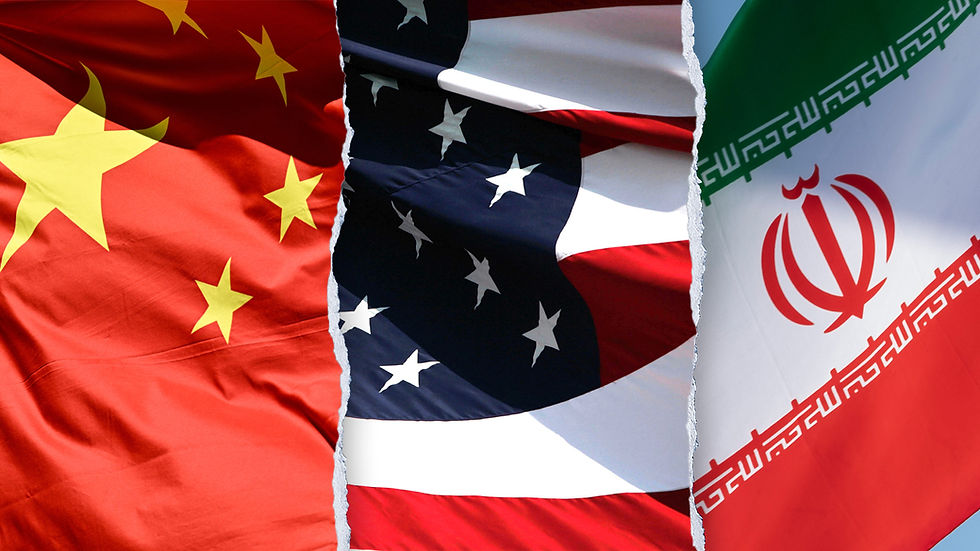
Image Courtesy: The Virginian

The Spark: How a War Without a Declaration Began
On the night of February 28, 2026, the United States and Israel launched a massive coordinated strike on Iran under the operational name Operation Epic Fury. The targets were not ambiguous. They explicitly targeted Iranian missile infrastructure, nuclear sites, air defenses, and the leadership of the Islamic Republic itself. Supreme Leader Ali Khamenei was martyred. The 'situation', as certain parties would insist upon calling it, had by every measurable criterion of international humanitarian law, crossed the threshold into what scholars, if not statesmen, would not hesitate to call war.
Yet no declaration of war was issued by either side. It is the defining legal architecture of modern armed conflict. The last formal declarations of war between major states occurred in 1945. What replaced them is a silence and a deliberate legal ambiguity that allows states to wage war while denying they are doing so. The Trump administration never presented its legal basis to Congress in a formal War Powers Authorization; Iran's retaliation came in the form of missile barrages framed as 'legitimate defence' rather than a declared counter-war.
This matters a lot. Under Common Article 2 of the Geneva Conventions, a formal declaration is irrelevant. If armed force is being used between states at a certain intensity and organization, International Humanitarian Law applies automatically. What you call it, is politics. What governs it, is law.
The parties involved are Israel, the United States, and Iran, with Hezbollah, the Houthis, and various proxy networks drawn into the periphery. The geography spans Iran's heartland, the Persian Gulf, the Arabian Sea, and now critically, the Indian Ocean. The Hague Regulations, the four Geneva Conventions, Additional Protocols I and II, and customary IHL are all simultaneously in play.
The Legal Basis for the Strike — and Its Profound Ambiguities
The United States and Israel have not articulated a coherent jus ad bellum justification. The closest approximation is anticipatory self-defence under Article 51 of the UN Charter, assumed to be backing the argument that Iran's nuclear programme represented an imminent threat requiring pre-emptive action. However, this argument carries crucial legal baggage.
Article 51 standard requires an armed attack to have already occurred before self-defence is triggered. Customary international law has evolved to permit anticipatory self-defence but only under the Caroline doctrine which obliges the threat to be instant, overwhelming –leaving no choice of means and no moment of deliberation. Iran had enriched uranium sufficient for approximately nine nuclear warheads, per the IAEA's May 2025 report. But the US Director of National Intelligence had testified in March 2025 that Iran was not, at that moment, building a nuclear weapon.
The legal tension is stark as striking a State for what it might do, based on a capability it has not yet weaponized, stretches Article 51 to its breaking point. The International Court of Justice and the UN Security Council, had they been permitted to function, would have found the strike legally contested at best, unlawful at worst. The Security Council, of course, was paralyzed from the moment the US exercised its permanent veto shield. Order, not justice – the system worked precisely as designed.
The Decapitation Strike and the Laws Governing Targeted Killing
The assassination of Ali Khamenei represents perhaps the most legally fraught element of the entire operation. Under IHL, a head of State who also exercises effective command over military forces, which Khamenei, as commander-in-chief of the IRGC and overall military, clearly did, may constitute a lawful military target under the principle of distinction, provided the attack offers military advantage proportionate to anticipated civilian harm.
But the strike also killed civilians in Tehran. Article 51(5)(b) of Additional Protocol I prohibits attacks where civilian harm is expected to be excessive in relation to the concrete and direct military advantage anticipated. The US and Israel have provided no proportionality assessment. The killing of civilians, including over 168 children and 14 teachers in what preliminary investigations strongly attribute to a U.S. strike on the Shajareh Tayyebeh elementary school in Minab on February 28, 2026, raises grave questions under Protocol I and customary IHL.
Trump's statements throughout the conflict have been revealing in their inconsistency. He initially described the nuclear strikes of June 2025 as a 'limited, one-off mission,' later in February 2026 expanded the objective to regime elimination, which is a fundamentally different legal enterprise. Statements of intent by heads of State matter in international law. They can constitute evidence of unlawful objectives, including actions directed at the collapse of a government rather than the degradation of military capacity. Regime change, as a belligerent objective, falls categorically outside the bounds of lawful warfare. Moreover, the forcible alteration of a state's governmental structure through armed conflict, constitutes a serious violation of the principle of sovereignty enshrined in Article 2(4) of the UN Charter.
Hosting Belligerents: Do Gulf States Enter the War?
US military assets operate out of Al Udeid Air Base in Qatar, Ali Al Salem in Kuwait, Prince Sultan in Saudi Arabia, and Al Dhafra in the UAE. Iran struck Al Udeid during the Twelve-Day War in 2025. In the current conflict, Iran has targeted US bases in Bahrain, Jordan, Kuwait, Qatar, and Saudi Arabia.
The legal question is direct, so does hosting an attacking belligerent's forces make a neutral state a co-belligerent subject to lawful military targeting?
The answer under the law of neutrality codified in Hague Convention V (1907) and XIII (1907) and reflected in customary law is nuanced but tends toward yes. A neutral state that allows a belligerent to use its territory as a base of military operations forfeits the protections of neutrality with respect to that activity. Iran's strikes on those bases are therefore legally defensible as attacks on legitimate military objectives and are not violations of sovereign neutrality.
The Gulf states are aware of the same. None of the countries has formally declared solidarity with the US-Israel operation. Notably, Saudi Arabia declined to invoke its alliance obligations, opting instead to characterise its non-participation through force majeure. The UAE signaled willingness to join a strait-securing coalition but only after March 18, weeks after hostilities had commenced, rendering its strategic value, at best, belated. Bahrain has been the most exposed, with the US-flagged vessel Stena Imperative struck at Bahrain's port. This selective exposure is precisely the legal calculation playing out in real time of “Precisely how many foreign military bases a neutral state may accommodate before neutrality becomes a courtesy extended only to one side?” remains an unsettled question.
The Strait of Hormuz: A Legal Crime in Slow Motion
On March 2, 2026, a senior IRGC official confirmed that the Strait of Hormuz was closed, threatening to ablaze any vessel that passed through it. By March 4, the IRGC declared complete control. Tanker traffic dropped by approximately 90% within days. Brent crude surpassed $126 per barrel. Over 40 ships disabled their AIS transponders. Around 400 vessels anchored in the Gulf of Oman, stranded.
Iran does not own the Strait of Hormuz. Under UNCLOS, the Strait carries a transit passage regime where all ships and aircraft enjoy the right of transit passage, which 'shall not be impeded,' even in times of armed conflict.
Legally, Iran has no right to close the Strait unilaterally. Iran signed UNCLOS on December 10, 1982 on the day of its adoption and has not ratified it. But under Article 18 of the Vienna Convention on the Law of Treaties, a signatory State is obligated to refrain from acts that would defeat the object and purpose of the treaty. Moreover, the ICJ's 1949 Corfu Channel judgment, which predates UNCLOS already established as customary international law, stated that straits used for international navigation must remain open even without treaty obligation. The customary rule binds Iran regardless of ratification.
What Iran has done instead is create a discriminatory passage regime based on political alignment with a selective blockade. Russia, China, India, Pakistan, Iraq, and Turkey have been permitted passage; the US, Israel, and their Western allies have not. This selective application carries its own legal dimension as it constitutes a form of economic coercion against neutral States, arguably a breach of Article 2(4) of the UN Charter, and most certainly a violation of IHL's requirement under the San Remo Manual that neutral shipping not be impeded unless it directly contributes to enemy military action.
China's position here is notable. China receives 45% of its oil via Hormuz. Beijing is pressing Tehran quietly to allow its vessels through, while publicly maintaining neutrality. Russia has been granted passage without public condemnation of Iran's closure.
The Sinking of IRIS Dena: Law, Ethics, and Strategic Embarrassment
Of all the events in this conflict, the sinking of the IRIS Dena is the one that should be studied for decades, but will not. On the morning of March 4, 2026, a US fast-attack submarine fired a single Mark 48 torpedo into the hull of the Iranian frigate approximately 19 nautical miles off Galle, Sri Lanka, in international waters. The ship sank within minutes. 87 bodies were recovered by the Sri Lanka Navy. 32 survivors were rescued. The rest of the approximately 180 crew, including the ship's band, remain missing.
The IRIS Dena had just completed the MILAN 2026 multilateral naval exercise hosted by the Indian Navy at Visakhapatnam, in which the United States itself participated, sending a P-8A Poseidon maritime patrol aircraft. Under the rules of the exercise, participating ships were not permitted to carry ammunition. The Dena was unarmed or lightly armed. The US Indo-Pacific Command contested this characterization, but former Indian Foreign Minister Kanwal Sibal noted the attack was 'premeditated,' as the US knew the Dena's status and location from joint participation in the exercise.
This raises various questions. .
First, was the Dena a lawful military target?
Yes, as an Iranian naval vessel belonging to a belligerent state in an active international armed conflict. The laws of war permit the attack of enemy warships anywhere outside neutral territorial waters.
Second, was any warning required?
No, because enemy warships, unlike merchant vessels, need not be warned before attack.
Third, does the location, the Indian Ocean, near Sri Lanka, constitute unlawful geographic expansion?
It does not. The law of naval warfare does not restrict attacks to a theatre of conflict; it follows the flag and the classification of vessels.
But the legal permissibility of an act does not exhaust its ethical or strategic dimensions. The attack destroyed India's carefully cultivated posture as a 'net security provider' in the Indian Ocean. It transformed India's maritime neighbourhood into a contestation point without India's knowledge or consent. The US conducted this strike in waters where India asserts primacy, against a ship that had just been hosted by India, without any prior notification to New Delhi. That is not a violation of international law.
Sri Lanka's role of receiving the distress call, conducting search and rescue operations, recovering and repatriating 87 bodies, reflects a perfect example of application of the Hague Conventions on the rights and duties of neutral powers. Sri Lanka had already informed Iran it would only allow belligerent ships to dock in emergencies. It honored that commitment. Colombo’s neutrality remained legally intact throughout.
The Ghost Ships: AIS Manipulation and the Law of the Sea
Perhaps the most notable legal terrain to emerge from this conflict concerns the legal identity of merchant ships in conflict zones. The Liberian-flagged Suezmax tanker Shenlong, went dark inside the Strait of Hormuz on March 8, disabling its AIS transponder, then reappeared on March 9 en route to Mumbai, where it delivered 135,335 metric tonnes of Saudi crude on March 11.
The Liberian Registry's own guidance issued under maritime security advisories, acknowledges that a master may switch off AIS when its continuous operation would compromise the safety or security of the ship, but instructs vessels to continue position reporting to naval authorities every two to three hours. The Shenlong's maneuver was not necessarily illegal; it was a calculated act of survival. However, it illustrates a profound breakdown in the maritime identification regime.
What needs more attention is the phenomenon of false flag AIS broadcasting: ships broadcasting destination strings such as 'CHINA OWNER ALL CREW' or 'CHINESE VSL AND CREW' to exploit Iran's informal exemption for Chinese-linked vessels. This constitutes, as Chatham House analysts have noted, 'a newer category of false flag operations in shipping', which is a deliberate misrepresentation of a vessel's flag state. Under UNCLOS Article 92, ships must sail under the flag of one state only, and flying false colors is a violation of the law of the sea. In wartime, vessels caught flying false flags lose the protections ordinarily accorded to neutral shipping, including immunity from seizure or attack. Ships broadcasting false Chinese ownership are, in a strict legal sense, forfeiting the very protection they seek.
Khamenei's Death, Trump's Statements, and the POW Question
Iran has not publicly addressed the prisoner of war question in any systematic way. Survivors of the IRIS Dena were not held by the US but were rescued by Sri Lanka and repatriated through civilian channels. But the broader conflict has generated combatant captures across multiple theatres. Under Geneva Convention III, prisoners of war must be treated humanely, not subjected to torture or coercion, and must be repatriated after cessation of hostilities. The absence of declared war creates a legal grey zone and brings in the question of who qualifies as a POW in an undeclared conflict?
The answer under Additional Protocol I is that the members of armed forces of a party to the conflict retain POW status regardless of whether war is declared. IRGC members captured by US forces are entitled to POW protections. Whether they are receiving them is unverified.
Trump's public statements have repeatedly created legal exposure. He has described targets as eliminated, referenced the 'obliteration' of Iran's nuclear programme, and suggested the war would end when Iran capitulated, are statements that are more consistent with coercive war aims such as regime subjugation, than the legally permissible goal of degrading military capacity. Under IHL, wars of subjugation — aimed at compelling a state's political surrender rather than achieving a military objective, are legally impermissible. Every statement Trump makes is being catalogued. Someday, a court might read them.
Conclusion: Order Without Justice
International law did not prevent this war. It was not designed to. All that exists such as the UN Charter, the Geneva Conventions, UNCLOS, and the Rome Statute was designed to contain war, to make it expensive for the belligerents, to create accountability after the fact, and to preserve the bare minimum of humanity in the conduct of violence. Whether it has succeeded even on those terms remains an open question.
What is clear is that Operation Epic Fury lacks a clean jus ad bellum foundation. The killing of Khamenei and the strikes on civilian infrastructure face serious jus in bello scrutiny. The Hormuz closure is a violation of transit passage law. The sinking of the Dena was legally permissible and strategically reckless. The ghost ships navigating a blockade by falsifying their identity are operating at the edge of legality. And the Gulf states hosting US forces are not neutral –they are co-belligerents who have not yet been held to account for it.
The law of war does not promise justice. It only aims to bring order or at least the possibility of order. However, the current situation reveals how even order is failing.
What comes next, whether a ceasefire, escalation, or something in between, will not only be shaped by military calculations but by whether any state or institution has the standing, the will, and the power to enforce legal obligations that states are invariably quick to invoke against their adversaries and equally quick to discard when applied to themselves.
Nothing in this war has been legal. Nothing has been lawful for a long time now. The question, so raised is, by what principle of law or equity is the party under attack held to standards of conduct that the aggressing state continuously violated?
Who questions the powerful? Who wrote these laws to begin with? This international legal order, overwhelmingly shaped and dominated by Western powers, is routinely violated by the very States that authored it, yet those under assault are expected to comply with every clause and constraint.
If any country in this conflict holds a legitimate right to self-defence, it is Iran.
References
Bertina Kudrin. (2026). The Strait of Hormuz and the Limits of Maritime Law. Lawfare. https://www.lawfaremedia.org/article/the-strait-of-hormuz-and-the-limits-of-maritime-law
Ferolla, M. (2024). Corfu Channel Case: Implications for the Law of Sea, Regime of Straits, and Territorial Rights. Springer EBooks, 1–9. https://doi.org/10.1007/978-3-319-68846-6_678-1
Frequently asked questions: Rules of war. (2016, October 19). International Committee of the Red Cross. https://www.icrc.org/en/document/FAQ-rules-of-war-ihl
Gragl, P., & Fitzmaurice, M. (2019). THE LEGAL CHARACTER OF ARTICLE 18 OF THE VIENNA CONVENTION ON THE LAW OF TREATIES. International and Comparative Law Quarterly, 68(3), 699–717. https://doi.org/10.1017/s0020589319000253
International Court of Justice. (1949). Corfu Channel (United Kingdom of Great Britain and Northern Ireland v. Albania). Www.icj-Cij.org. https://www.icj-cij.org/case/1
J. Suffern, B. (2025, July 18). Law Born of Fire: the Caroline Affair and Anticipatory Self-Defense. U.S. Naval Institute. https://www.usni.org/magazines/naval-history/2025/august/law-born-fire-caroline-affair-and-anticipatory-self-defense
Lott, A. (2026, March 10). The Legality of Iran’s Closure of the Strait of Hormuz. EJIL: Talk! https://www.ejiltalk.org/the-legality-of-irans-closure-of-the-strait-of-hormuz/
Nilson, C. (2008). The Legality of Anticipatory Self-Defence in International Law | Lund University. Www.lunduniversity.lu.se. https://www.lunduniversity.lu.se/lup/publication/1560475
Nitya Labh. (2025, December 15). Conflict in the Strait of Hormuz is spilling into the Indian Ocean. Chatham House – International Affairs Think Tank. https://www.chathamhouse.org/2026/03/conflict-strait-hormuz-spilling-indian-ocean
O’Meara, C. (2022). Reconceptualising the right of self-defence against “imminent” armed attacks. Journal on the Use of Force and International Law, 9(2), 1–46. https://doi.org/10.1080/20531702.2022.2097618
Oral, N. (2012). Transit Passage Rights in the Strait of Hormuz and Iran’s Threats to Block the Passage of Oil Tankers. American Society of International Law, 16(16).
Romi, M. (2026, March). 48 Hours Into the Iran War: The Maritime Impact. Windward. https://windward.ai/blog/48-hours-into-the-iran-war/
Shankar, P. (2026, March 26). Tehran’s “toll booth”: How Iran picks who to let through Strait of Hormuz. Al Jazeera. https://www.aljazeera.com/news/2026/3/26/tehranstollbooth-how-iran-picks-who-to-let-through-strait-of-hormuz
Vienna Convention Law Treaties. (2019). Oas.org. https://www.oas.org/legal/english/docs/Vienna%20Convention%20Treaties.htm
(Arul Braighta is a research officer at C3S. The views expressed are those of the author and do not reflect the views of C3S.)



Comments