

C3S ISSUE BRIEF XXXIX - China and the US-Iran Conflict: The Gains of Staying Out.

Updated: Sep 10
By Annunthra Rangan & Aditya Singh
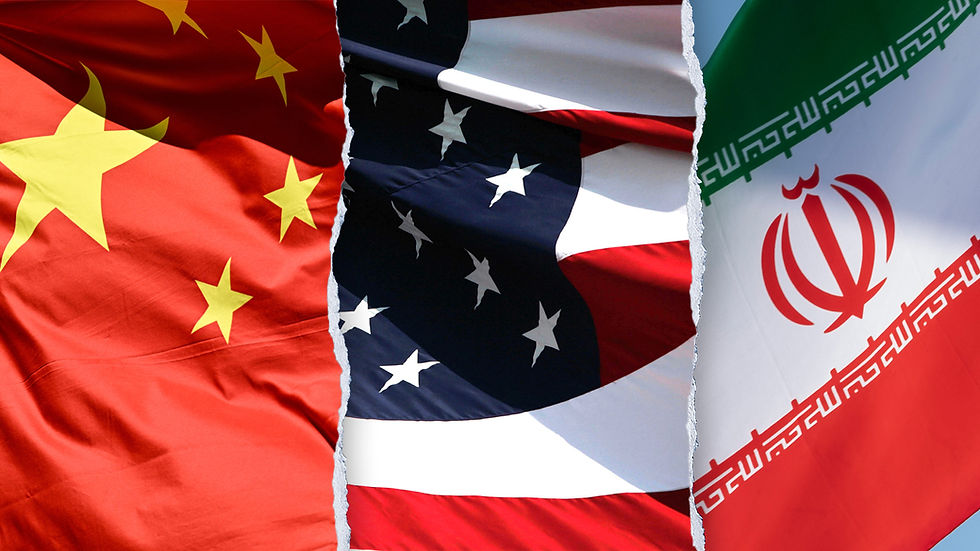
The current US-Iran confrontation can no longer be understood as a bilateral contest between Washington and Tehran. Six months into a war imposed on Iran on February 28, 2026, the conflict has widened into a broader struggle over the political and economic architecture of West Asia itself. Having failed to subdue Iran through military force, the United States has turned to an increasingly punitive campaign of economic strangulation, a form of collective punishment aimed at an entire population rather than a settlement with a government. Iran, for its part, has absorbed sustained military aggression without conceding the core issues at the heart of the confrontation.
The June 17 memorandum offered a brief pause in hostilities, but its collapse on August 17 only confirmed what Tehran had argued from the outset: that Washington was never negotiating in good faith. For Iran, the essential question is no longer whether it can survive American pressure. It has already answered that question. The question now is whether Tehran can convert the strategic assets it still commands, its geography, its energy position, its regional relationships, and its ability to make the price of aggression unbearable, into lasting political leverage, while continuing to build trust with the regional actors whose cooperation it will need in the years ahead.
Iran's position, in this sense, is far stronger than its critics allow. Tehran has weathered direct military assault from the world's most powerful military and its regional allies without being forced to abandon its core positions. Its economy is under strain, but it has endured sanctions for four decades and has consistently found ways to adapt. What Iran has demonstrated since February is not fragility but endurance: a state that cannot be excluded from any serious discussion of the region's future, no matter how much pressure is applied against it. The real story of this war is not Iranian weakness. It is the failure of an enormous campaign of coercion to break Iranian resolve.
Read the full Issue Brief below:
(Ms Annunthra Ranagn is a former Senior Research Officer at C3S, and Mr. Aditya Singh is a legal professional specialising in criminal and matrimonial litigation, with a strong interest in philosophy, digital strategy, personal development, and geopolitics. The views expressed here are of the author's own and do not reflect the views of C3S.)


Comments